
Restore your smile and your confidence
Complete restoration of oral function and aesthetics.
About This Treatment
Oral rehabilitation is a comprehensive treatment aimed at restoring chewing function, aesthetics, and oral health for patients with multiple dental problems. We combine different specialties - implants, prosthetics, aesthetics - to create a personalized treatment plan that restores quality of life and confidence in your smile.
We Understand Your Situation
Years of accumulated dental problems, multiple missing or damaged teeth, difficulty chewing certain foods, or an old prosthesis that no longer fits well — these situations may seem impossible to solve. If you feel that your mouth needs a complete transformation and do not know where to start, oral rehabilitation offers a coordinated approach that treats all problems in an integrated way, giving you back a functional and beautiful smile.
Rehabilitation Solutions
01
Crowns & Bridges
Individual or multiple ceramic restorations for damaged or missing teeth.
- High aesthetic ceramic
- 15-25 years durability
- Biocompatible
02
Single Implants
Replacement of individual teeth with titanium implants and ceramic crowns.
- Preserves bone
- Doesn't affect neighboring teeth
- Permanent solution
03
All-on-4 / All-on-6
Complete arch rehabilitation with just 4-6 strategically positioned implants.
- Teeth same day
- No grafts in most cases
- Optimized cost
Why Choose Oral Rehabilitation?
01
Multidisciplinary Approach
Integrated team of specialists working together for a harmonious result.
02
Aesthetics and Function
Complete smile recovery with latest-generation materials and natural appearance.
03
Long-Lasting Results
Definitive solutions with implants and high-quality ceramics for decades of use.
Digital Precision Planning
Our fully digital workflow integrates photography, intraoral scans, 3D CT, and planning software to create your new smile with millimetric precision.
Digital Smile Design
Visualize the result before starting
3D Intraoral Scanner
Digital impressions without discomfort
Cone Beam CT
High resolution 3D images
CAD/CAM
Precision-manufactured restorations
PRF Regenerative Therapy
Accelerated healing at every surgical phase
Compare Your Options
See how modern oral rehabilitation compares to other alternatives.
| Feature | Oral Rehabilitation | Doing Nothing | Removable Dentures |
|---|---|---|---|
| Chewing | 100% natural | Increasingly difficult | 50-60% effectiveness |
| Aesthetics | Indistinguishable from natural teeth | Progressively deteriorates | Artificial appearance |
| Bone Health | Preserves and stimulates bone | Continuous bone loss | Accelerates resorption |
| Durability | 15-25+ years | N/A | 5-7 years, frequent adjustments |
Chewing
- Oral Rehabilitation
- 100% natural
- Doing Nothing
- Increasingly difficult
- Removable Dentures
- 50-60% effectiveness
Aesthetics
- Oral Rehabilitation
- Indistinguishable from natural teeth
- Doing Nothing
- Progressively deteriorates
- Removable Dentures
- Artificial appearance
Bone Health
- Oral Rehabilitation
- Preserves and stimulates bone
- Doing Nothing
- Continuous bone loss
- Removable Dentures
- Accelerates resorption
Durability
- Oral Rehabilitation
- 15-25+ years
- Doing Nothing
- N/A
- Removable Dentures
- 5-7 years, frequent adjustments
What to Expect at Your Consultation
A complete consultation to understand your needs and create a personalized plan.
01
Complete Exam
Detailed assessment of your oral health, including teeth, gums, and bone structure.
02
Imaging Exams
3D CT and digital photographs for accurate diagnosis and proper planning.
03
Plan Discussion
Presentation of treatment options, timelines, and investment required.
04
Financing Options
Explanation of available payment facilities to make treatment accessible.
Why does this matter?
Untreated dental problems affect much more than your smile.
Affected Confidence
Avoiding smiling or speaking in public can affect relationships and professional opportunities.
Compromised Digestion
Inadequate chewing overloads the digestive system and can cause nutritional problems.
Progressive Bone Loss
Missing teeth cause continuous bone resorption, complicating future treatments.
Shifting Teeth
Remaining teeth move into gaps, causing bite problems and further misalignment.
Premature Aging
Loss of teeth and bone support leads to facial collapse and an older appearance.
Overall Health Impact
Oral infections and poor nutrition from dental problems affect your general health.
Treatment Phases
A structured process to ensure exceptional results.
01
Assessment & Planning
Exams, digital simulation, and treatment plan definition.
1-2 weeks
02
Preparation
Necessary prior treatments (extractions, grafts, etc.).
If needed
03
Surgical Phase
Implant placement and provisional restorations.
1-3 months
04
Healing
Implant osseointegration period.
3-6 months
05
Finalization
Placement of definitive ceramic restorations.
2-4 weeks
Is This Treatment For You?
This is for you if…
- Have one or more missing or severely damaged teeth
- Want to recover full chewing function
- Looking for a durable and aesthetic solution
- Willing to invest in your oral health
- Don't smoke or willing to reduce/quit
May not be ideal if...
- Have uncontrolled medical conditions (severe diabetes, etc.)
- Undergoing radiotherapy treatment in the head region
- Looking for only a temporary solution
A Word from Our Clinical Director
“Modern oral rehabilitation integrates dental implants, prosthetics, and aesthetics for harmonious results. At our clinic, we use Digital Smile Design to visualize the result, 3D intraoral scanner for precise digital impressions, and CAD/CAM technology for manufacturing ceramic restorations in zirconia and lithium disilicate. We also incorporate PRF regenerative therapy — concentrated growth factors from your own blood — to accelerate healing at every surgical phase of the rehabilitation process. Whether for crowns, bridges, single implants, or complete All-on-4/All-on-6 rehabilitation, our multidisciplinary team coordinates each phase of treatment. Recovering chewing function and smile aesthetics transforms quality of life.”
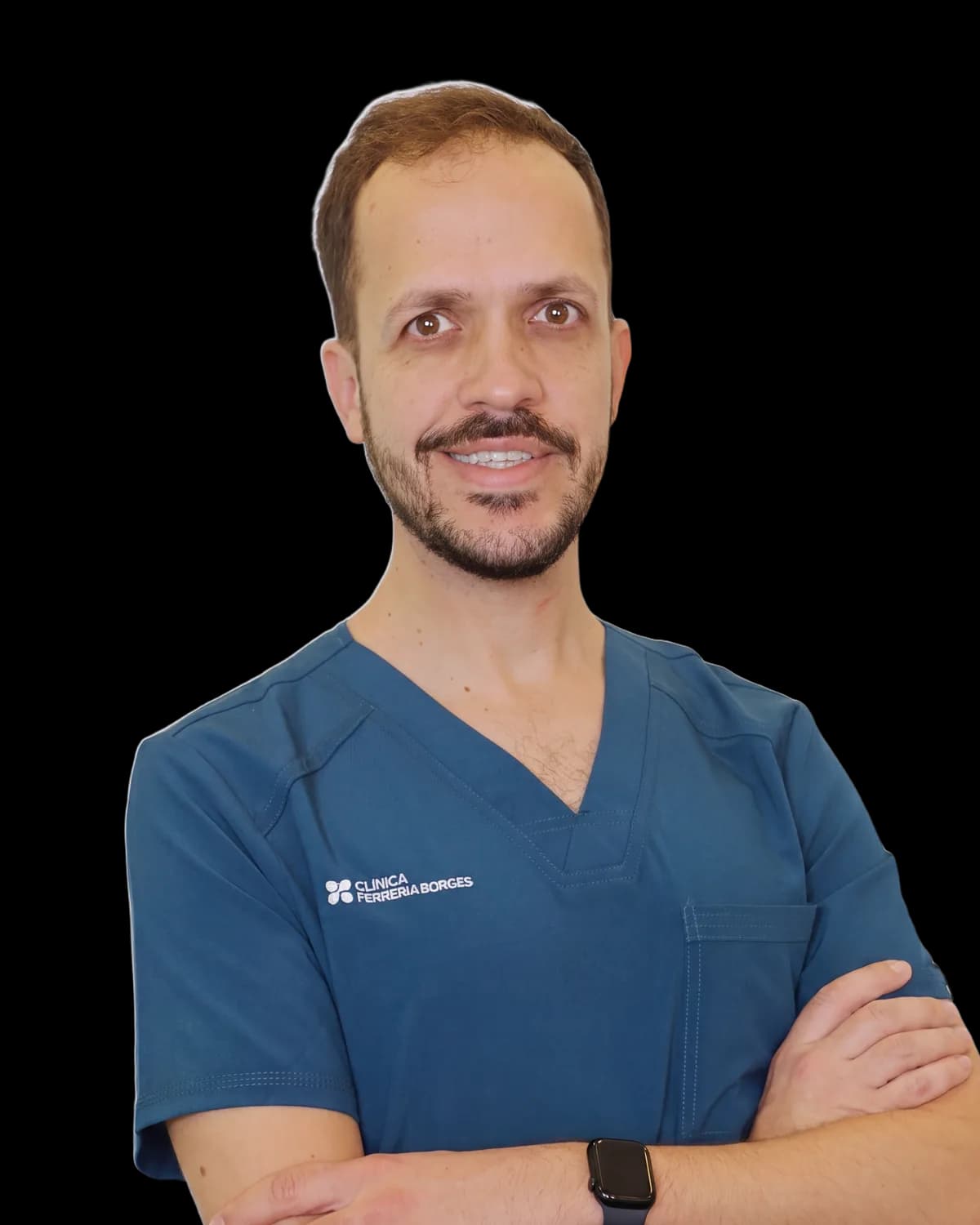
Dr. Carlos Sousa
Clinical Director
Rehabilitation Consultation
Ready to Restore Your Smile?
Book your assessment consultation and discover how we can help you recover the function and aesthetics of your smile.
Prices, insurance and financing
Indicative reference price from our published list. A detailed quote for your case is given in writing after diagnosis, and the final price may depend on your insurer.
- Ceramic Crown
- From600€
Frequently Asked Questions
Find answers to the most common questions about this treatment.
What is oral rehabilitation?
Oral rehabilitation, also known as full mouth reconstruction, is a comprehensive treatment aimed at restoring chewing function, aesthetics, and oral health in patients with multiple dental problems. It combines various specialties — implants, prosthetics, aesthetics, periodontics, and orthodontics — in a personalized, coordinated treatment plan. It is indicated for those who have lost multiple teeth, suffer from severe tooth wear, have bite problems, or desire a complete smile transformation.
Who is a candidate for oral rehabilitation?
Oral rehabilitation is indicated for patients with: multiple missing or damaged teeth; severe tooth wear (erosion, bruxism); bite or occlusion problems; fractured teeth or failed old restorations; periodontal disease causing bone loss; severely discolored or malformed teeth; temporomandibular joint (TMJ) dysfunction. Essentially, anyone who needs treatment on multiple teeth or desires a complete smile transformation can benefit from this treatment.
What is Digital Smile Design (DSD)?
Digital Smile Design (DSD) is a revolutionary digital planning tool that allows us to visualize the final treatment result before starting. Through photographs, videos, and 3D models, we create a simulation of your new smile that you can approve or modify. This technology integrates with CAD/CAM systems to manufacture restorations with millimetric precision. Benefits include: preview of results; clear communication between patient, dentist, and laboratory; greater predictability; reduction of surprises in the final outcome.
How long does complete oral rehabilitation take?
Duration varies significantly depending on case complexity, ranging from a few months to over a year. Influencing factors include: number of teeth to treat; need for implants (which require healing time); prior periodontal treatment; orthodontics if needed. A typical case may involve: 1-2 months of planning and preparation; 3-6 months for implants (if needed); 2-3 months for definitive restorations. Throughout the process, we use provisional restorations so you never go without functional teeth.
What are fixed prostheses on implants?
Fixed prostheses on implants are permanent dental structures that replace missing teeth and are anchored to titanium implants integrated into the jawbone. Unlike removable prostheses, they do not need to be removed for cleaning and provide a sensation very close to natural teeth. Options include: single crowns on implants; fixed bridges on multiple implants; All-on-4 or All-on-6 solutions for complete arches. They offer superior stability, preserve bone, and allow confident chewing.
What is the All-on-4 protocol?
All-on-4 is an innovative concept that allows rehabilitation of a complete arch (all upper or lower teeth) with just 4 strategically positioned implants. The two posterior implants are placed at an angle to maximize contact with available bone, often avoiding the need for bone grafts. Benefits: faster treatment (provisional teeth same day); fewer implants needed; possible even with some bone loss; generally more affordable cost than multiple individual implants.
Is oral rehabilitation painful?
Modern oral rehabilitation is performed with maximum patient comfort. During procedures, we use effective local anesthesia, and for more anxious patients, we offer conscious sedation. Post-operative discomfort is usually mild to moderate and well controlled with analgesic and anti-inflammatory medication. Most patients are pleasantly surprised by the low level of discomfort. Between sessions, provisional restorations ensure function and aesthetics, allowing normal life.
How is oral rehabilitation planned?
Planning is the most important phase and includes: 1) Complete clinical evaluation — detailed examination of teeth, gums, bite, and TMJ; 2) Advanced imaging — panoramic X-rays and 3D CT scan to assess bone and structures; 3) Models and photographs — records for digital analysis and planning (DSD); 4) Discussion with patient — presentation of plan, options, and result simulation; 5) Interdisciplinary coordination — when needed, involvement of periodontist, orthodontist, surgeon. Only after patient approval do we proceed with treatment.
What is the role of ceramic materials in oral rehabilitation?
Ceramic materials have revolutionized oral rehabilitation, offering superior aesthetics and excellent mechanical properties. Main types: zirconia — extremely resistant, ideal for posteriors and bridge structures; lithium disilicate — excellent translucency, perfect for anterior teeth; feldspathic ceramics — maximum aesthetics for veneer layers. Advantages: biocompatibility (no allergies); stain resistance; exceptional durability (15-25+ years); natural appearance indistinguishable from real teeth. They are manufactured with CAD/CAM technology for millimetric precision.
What happens if I have insufficient bone for implants?
Insufficient bone is no longer an absolute barrier to implants. Available solutions: bone grafts — can be autogenous (from patient), allogenic or synthetic to regenerate bone; sinus lift — technique to increase bone in the upper posterior region; zygomatic implants — anchored in the zygomatic bone for severe atrophy cases; angled techniques (All-on-4) — utilize available bone with tilted implants. Our 3D CT scan allows precise assessment of available bone and planning the best solution for each case.
How much does oral rehabilitation cost?
Cost varies significantly depending on complexity and treatments needed. Influencing factors: number of implants and crowns; need for bone grafts; type of materials (zirconia vs other ceramics); preparatory treatments (periodontics, extractions). We offer: detailed no-obligation quote after evaluation; flexible payment plans; partnerships with insurers and financing. Considering that a well-executed rehabilitation can last 20+ years, it is an investment in quality of life. Schedule a consultation for a personalized quote.
How to care for oral rehabilitation after treatment?
Proper maintenance is essential for treatment longevity. Daily care: brushing 2-3x/day with soft brush; use of dental floss or interdental brushes; oral irrigator recommended for implant prostheses. Maintenance appointments: professional cleanings every 4-6 months; occlusion check and adjustments if needed; periodic X-rays to monitor implants. Avoid: biting hard objects (ice, pens); grinding or clenching teeth (use night guard if indicated); smoking (harms periodontal health).
All Treatments
 Invisible Aligners
 Dental Sleep Medicine
 Orofacial Pain
 Painless GBT Dental CleaningOral Hygiene with Ozone TherapyIntegrative Dentistry
 Pediatric Dentistry
 Dental Implants
 Oral Surgery
 PeriodonticsInvisalign
 Orthodontics
 Teeth Whitening
 Aesthetic RestorationOral Rehabilitation
 Endodontics
 Restorative Dentistry
 Dental ConsultationFacial HarmonizationOzone TherapyPRF — Platelet-Rich FibrinSMART Protocol